
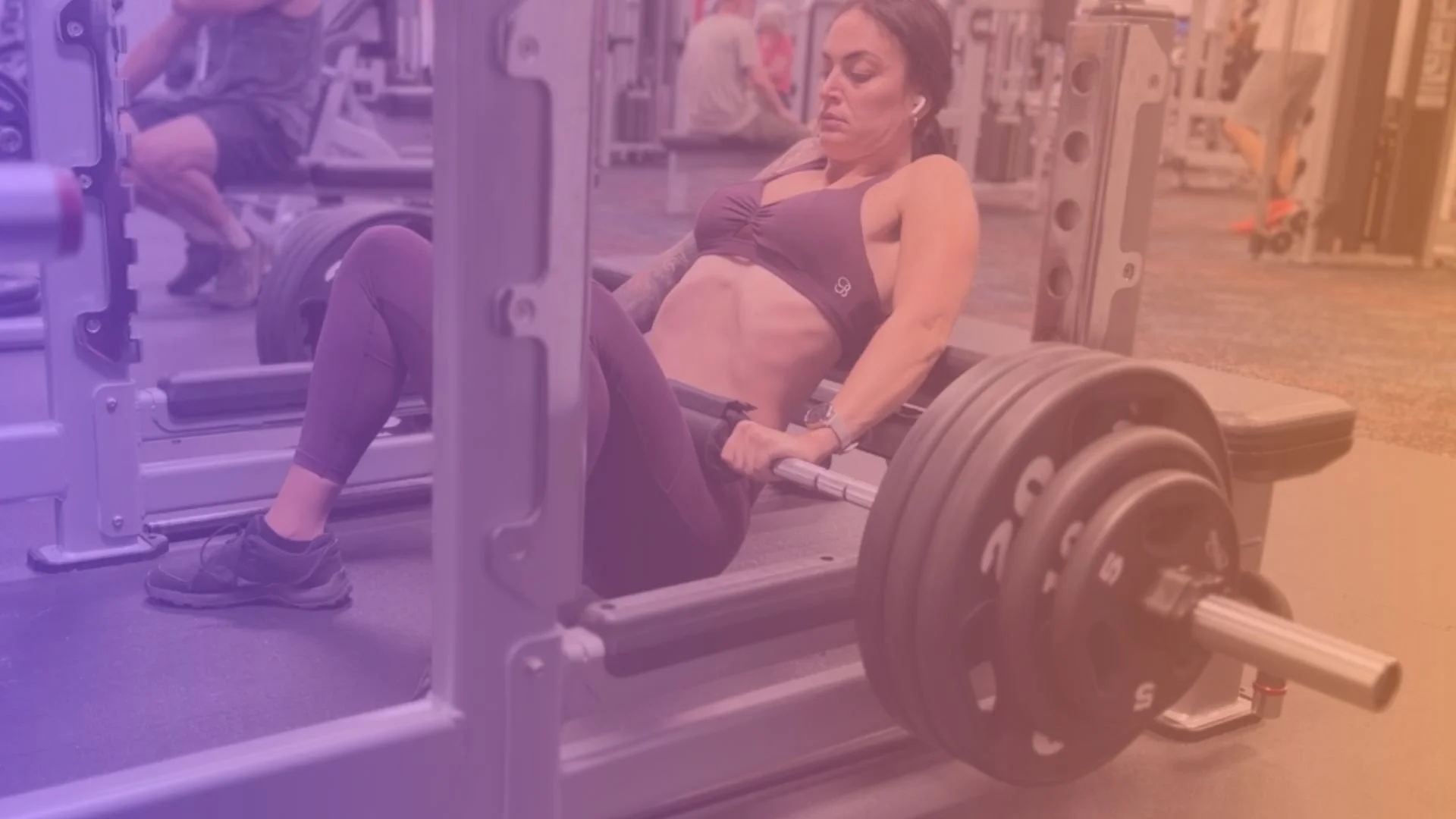
The reason you still don't have rounded, juicy glutes usually comes down to one (or several) of the exact critical leaks outlined in this article. Building an athletic, 3D hourglass physique isn't about random workouts, chasing a burn, or running yourself into the ground with endless cardio.
To sculpt fully developed, lifted glutes, you need a clear understanding of how glute muscles actually grow, how to hit them from the right angles, and how to fuel them properly. Your glutes will never grow on air, 1,200 calories, and comfort-zone weight.
Here is your complete, science-backed blueprint to master your training, fix your nutrition, and shape your rounded glutes.
Your glutes are more than one muscle
You likely know that the glutes consists of three main muscles: the Gluteus Maximus, Gluteus Medius, and Gluteus Minimus. They overlap each other, but fully rounding out your glutes isn't just about training separate muscles, it's about targeting specific subdivisions and movement patterns.
The Gluteus Maximus is the largest muscle in the body and dictates the overall shape of your hips and butt. Mechanically, it is divided into two distinct regions:
Lower Gluteus Maximus: The big, round base of your glutes. It works hardest during hip extension. To target the lower glutes, you prioritize heavy stretched movements like squats, RDLs, and deep lunges.
Upper Gluteus Maximus: The top portion that creates the "shelf" and gives your glutes a lifted 3D profile from the side. To hit this upper region specifically, you must incorporate hip abduction exercises.
Simultaneous Activation: Performing hip thrusts and glute bridges activates both the upper and lower subdivisions at maximum output.
Meanwhile, the Gluteus Medius and Minimus sit on the side of your hips and are responsible for abduction and external rotation. The glute medius contributes directly to upper-hip fullness, but it works synergistically with the upper glute max making abduction movements non-negotiable.
For a balanced, feminine hourglass silhouette, the upper glutes and glute medius create the hip width that visually shrinks your waist (especially when paired with a strong upper back). Yet, squat patterns barely touch these areas. If your leg day is purely squats and leg presses, you are growing the thighs you want to over-develop the least, while missing the upper shelf you want to build the most.
Why your quads steal the work (the "quad-dominant" myth)
Most women want shapely, athletic legs, so they train them more times per week and stack their sessions with leg presses, leg extensions, squats, and lunges. Their quads get hit from every direction.
Because these are knee-dominant exercises, your quads take over the mechanical load. You leave the gym with burning thighs, assuming you had a great session, and over time, your quads grow while your glutes lag. You aren't biologically "quad-dominant" you trained yourself to become quad-dominant.
What’s missing is dedicated hip-dominant work: hip thrusts, single-leg RDLs, 45-degree hyperextensions, cable kickbacks, seated abductions, and reverse hypers. Quads should complement the physique, not overpower it.
You don't have to eliminate knee-dominant movements; small biomechanical tweaks shift the load straight into your glutes:
Lunges & Split Squats: Take a longer stride and lean your torso slightly forward over your front leg. You’ll instantly feel the tension shift into the glute-hamstring tie-in.
Leg Press: Place your feet higher on the platform and slightly wider. Drive through your heels and lower the sled only as far as your lower back can stay flat.
Hip Thrusts (The Burning Protocol): Tuck your chin, keep your eyes forward, and ensure your shins are strictly vertical at top extension. Pause for a full second at the top and squeeze using a posterior pelvic tilt ("scoop"). If you feel it in your lower back or hamstrings, fix your foot placement before adding weight.
Same exercise, same angle, every week
A massive mistake many women make is doing the exact same exercises with the exact same loads for months: heavy hip thrusts every single leg day, 3 sets of 12.
To build roundness, your glutes must be loaded across three distinct vector positions, as categorized by Bret Contreras in Glute Lab:
Stretched position (high tension at length): RDLs, deep squats, walking lunges, and Bulgarian split squats.
Squeezed position (peak tension at shortening): Hip thrusts, glute bridges, kickbacks, and back extensions with a top squeeze.
Sideways / abduction (upper glute & medius width): Cable or machine abductions, banded lateral walks, and side-lying hip raises.
If your program only includes one of these vectors, you are building only a fraction of the muscle group.
You stop before your glutes have a reason to grow
Let's be completely honest. It's comfortable to walk into the gym, do 4 sets of 12 reps with a familiar weight, and call it a leg day. That comfort zone is the exact reason your glutes aren't changing.
Most women leave far too much strength in the tank. They stop the set the moment it starts to burn or feel uncomfortable. Your brain screams "Stop, this hurts, let's protect ourselves!" But right past that discomfort is where real adaptation happens.
Overcoming that mental wall, while keeping strict form and safety first, is where training becomes fun, effective and addictive. The gluteus maximus is a massive, powerful muscle group. It needs a real reason to adapt. Take your working sets close to true failure, track your numbers, and systematically apply progressive overload: more load, more reps, controlled eccentrics, or top pauses. Don't just show up in the gym. Test your strength and enjoy the process.
Your glutes can't grow on 1200 calories
Female trap: fearing food, fearing fat gain, and constantly trying to look as lean as humanly possible. You can execute the perfect training split, but if your body has no raw materials, it cannot construct new muscle tissue.
You do not need to go on an aggressive old-school bodybuilder "bulk" and gain 10 kg of fat in a few months. To build dense muscle, you simply need a slight calorie surplus, roughly +100 to +300 kcal above your maintenance level. The key is staying consistent with a solid protein intake (1.8 to 2.2g per kg of body weight), adjusted to how you perform and progress.
Many of my clients came to me eating under 1,200 calories while grinding through endless cardio to burn it off. When we raised their food intake, sometimes by over 1,000 calories, cut the excessive cardio, and shifted toward heavy strength training, their transformations were insane. No unwanted fat gain, just round glutes, a defined upper shelf, popping confidence, and real energy.
Your genetics set the frame
"Why does my butt look square?" "Why do I have hip dips?" "Why does she have a shelf and I don't?"
Let’s get one thing straight: you cannot change your skeletal anatomy. No amount of glute kickbacks or collagen powder will alter your DNA, shift your hip socket angles, or shorten your pelvis.
Shape of your pelvis and thigh bones dictates your baseline appearance from every angle:
The bone architecture (hip dips, squares, and hearts):
The gap (hip dips): Hip dips aren't "fat to burn" or a "weak muscle"; they are simply the visual space between your pelvic rim and the top of your thigh bone (greater trochanter). If your pelvis is wide or your thigh bone sits lower, you will naturally have a more pronounced inward dent.
The shape: Wide pelvic bones paired with long thigh bone necks (femoral necks) create a square or round look. Narrower pelvic structures lean toward a heart or pear shape. Wide hips with tightly tucked thigh bones lean toward a V-shape.
The side profile (the "shelf" secret): A more horizontal tailbone (sacrum) creates an instant visual shelf, while a vertical tailbone naturally looks flatter, even before adding muscle.
Control what you can and ignore what you can't: Obsessing over bone structure is a waste of energy. You cannot reshape your skeleton, but you have 100% control over your muscle mass and body composition. Building the Gluteus Medius and Upper Glute Max creates a muscular cushion over the pelvis, softening hip dips and building an upper shelf.
The reality check: Genetics draw the outlines, but almost no woman is anywhere near her genetic limit. Women with wide hips and "difficult" insertion angles built mind-blowing, rounded physiques simply because they stopped making excuses about their bones, fed their bodies properly, and trained close to failure with unyielding intensity.
Your bones set the frame, what you build on top of them is entirely up to you.
Reference: Bret Contreras and Glen Cordoza, Glute Lab: The Art and Science of Strength and Physique Training, Victory Belt Publishing, 2019.
