Barbora is a fitness trainer in New Zealand: She started out cleaning, and in a few weeks she launched a successful business on the other side of the world
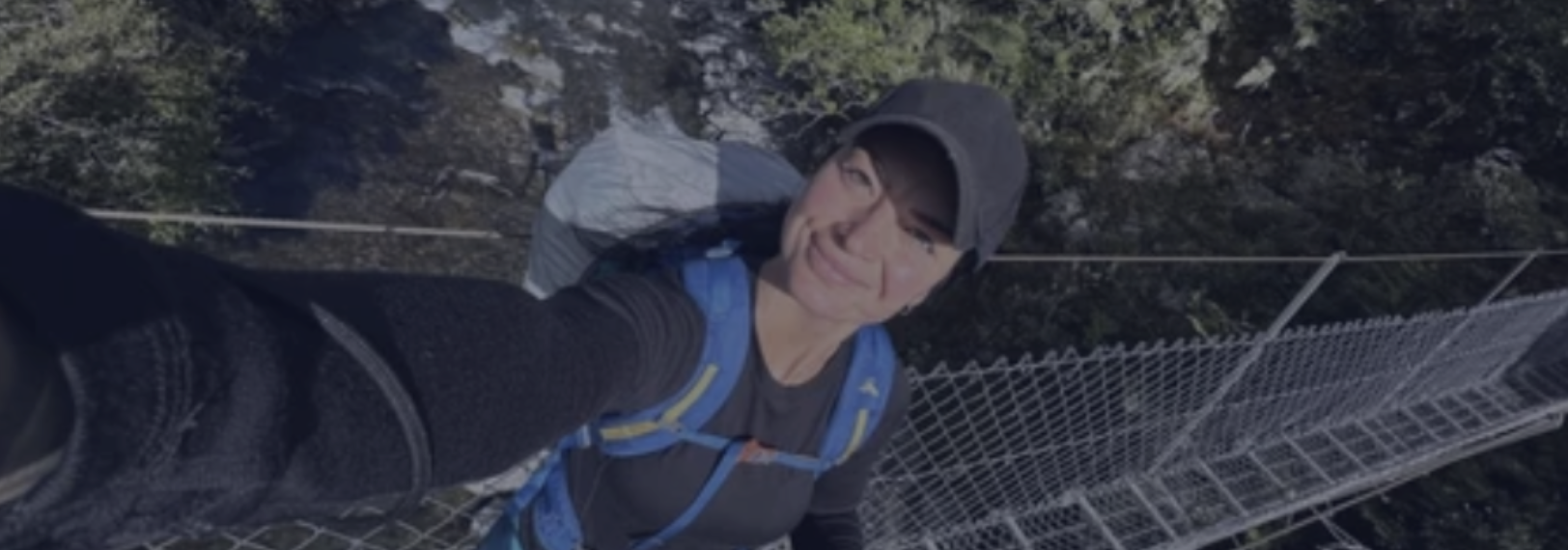
Barbora is a fitness trainer in New Zealand:
She started out cleaning, and in a few weeks she launched a successful business on the other side of the world
This article was originally published in the lifestyle magazine: REFRESHERWhat is the reality of living surrounded by beautiful nature?
Barbora Hojdíková started her career as a trainer and nutritionist after college. She actively competes in the Bikini fitness category and specializes in training and preparing women for competitions with an emphasis on respecting their hormonal cycle.
As a certified trainer, in addition to working with women individually, she also educates them – organizing workshops, webinars and is currently preparing a book that discusses the impact of hormones in more detail. Six years ago, she moved to New Zealand, where she successfully continued her coaching career.
In an interview for Refresher, Barbora talked not only about her work, but also about her beginnings in New Zealand, about her path to success, and about life on the other side of the world. "Everything is much more expensive there now than it used to be. When I came there six years ago, prices were half as much. Today, it also depends on which city a person wants to live in - in the larger ones, they will easily pay twice as much. It is common for people, even families, to share houses to save money," Barbora explains.
Although New Zealand has offered her many new opportunities and charmed her with its breathtaking nature, she also greatly appreciates what Slovakia has to offer. "The fact that I'm in Slovakia for just a short while after three years now feels absolutely amazing. I'm captivated by what we have here. There's so much different food in the shops, different dairy products and the like - there's not that much in New Zealand, because who would import it from the end of the world," says Barbora, adding that she can't let our nature and mountains go to waste either.
How did you end up in New Zealand and what led you to that decision?
First I was in Alaska and then my boyfriend and I said we'd go to the other side of the world. (laughs) But honestly, I wanted to escape. At that time, my mom died and I needed a change. I was going through a difficult time and I compensated for that by escaping.
It's hard to get a visa in New Zealand and we managed to do it. We chose Queenstown in the south of New Zealand - we decided on it basically just because of the beautiful photos of nature and mountains. It's one of the most beautiful places in the world, beautiful mountains, nature… We were doing a lot of outdoor activities at the time, so we really liked it.
You mentioned that you left with only “a pair of socks.” Did you have a plan?
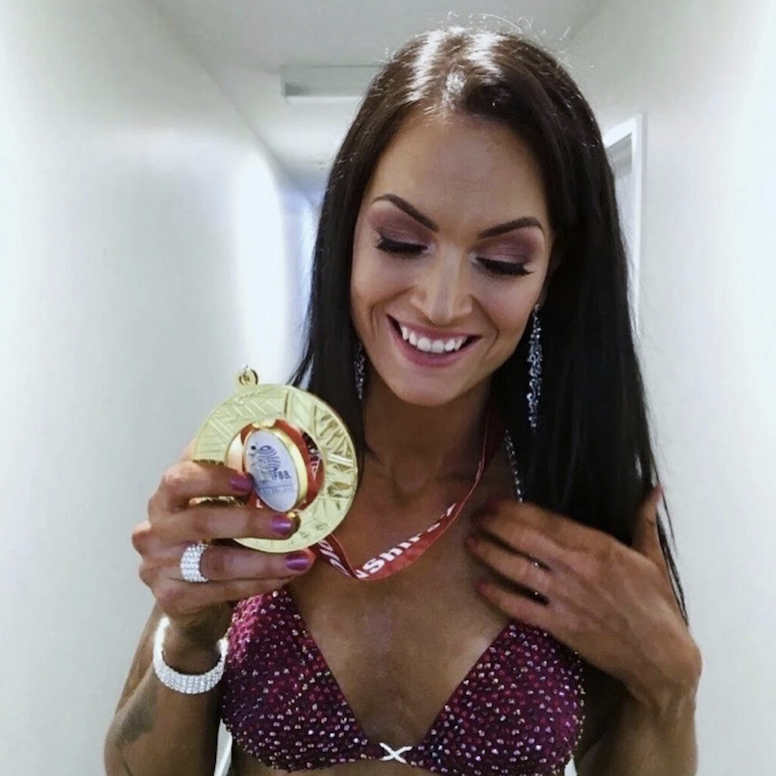
When I left for New Zealand, I knew I wanted to compete, and I already had a very clear vision in my head – I had a picture in my head of myself biting into a gold medal. And that's exactly what happened – I won a gold medal at my very first competition.
How was your start?
We had nothing at all. The first few nights we slept in a hostel, then we quickly found accommodation and two days later we were working. At first it was just a part-time job – we cleaned. After a month I was working at the reception at the gym and on the side I started training clients. It was terrible, I could hardly understand their English. The biggest stress was when the phone rang – I preferred to pretend that I was vacuuming and couldn't hear. (laughs) But gradually it got better and better, and in the next gym I started building my own business as a trainer.
But suddenly, all the trainers were fired overnight. It was at a time when I had big projects underway and was preparing clients for competitions. A month later, I lost all my money due to a scam. They couldn't take me to the gym because of the pandemic. So I built my own small gym in the garage, started training clients, and had two extra jobs on the side – just to survive on the other side of the world and earn my money back as quickly as possible.
What happened? Was it phishing, which is also widespread in Slovakia?
Yes, I lost all my savings. It's quite common in New Zealand. It was strange - all the money went out of my account at once and I never got back to it. I was starting from scratch, during the pandemic, with no job and no money.
Phishing is a form of online fraud in which attackers impersonate trusted institutions – such as banks, courier companies or government agencies – in order to obtain sensitive data such as passwords, card numbers or access to online banking. It most often comes in the form of an email, SMS or a fake website. In Slovakia, the incidence of phishing has increased significantly in recent years, so it is important to be cautious and never enter personal information through links that look suspicious.
After three years, I returned to Slovakia to visit my family. After returning, I moved to Christchurch, where I am still today – I work in a large gym there, where I have my own business.
How much money is needed to start life in New Zealand – from airfare to first accommodation and basic expenses?
Everything is much more expensive there now than it used to be. When I came there six years ago, the prices were half as much. Today it also depends on which city you want to live in – in the bigger ones you can easily pay twice as much. It is common for people, even families, to share houses to save money. A round-trip flight to New Zealand can cost around 1500 euros with low-cost airlines, but if you want to fly comfortably, expect to pay around 2000 euros.
As for housing, renting a room in a house can cost from 100 to 200 euros per week, because they pay weekly. For example, those who do seasonal work - such as picking fruit - can easily find work - many Czechs and Slovaks do it, it's great if you want to earn something and at the same time travel and enjoy the country. However, if you want to work in your field, it's a bit more difficult and you have to qualify and you have to fight.
What are the earnings like in New Zealand?
It's hard to estimate exactly, because I've been running my own business since the beginning, so I don't have a complete overview of how much people earn. But I think the minimum amount could be around 600-800 New Zealand dollars per week, which is about 300-400 euros. Some people have trouble covering the costs of living in New Zealand, others are better off, and some are completely fine. Fresh vegetables and fruit are very expensive out of season - as are basic foods like butter or eggs. That's why people often reach for convenience foods, because healthy, unprocessed food is much more expensive.
Australia is known for its active lifestyle, love of sports and a healthy lifestyle, and often go for walks at sunrise. Is New Zealand any different in this regard?
Absolutely. In Australia, it's really true. Places like the Gold Coast, Sydney, Brisbane - there's great food everywhere and people really run in the morning, work out, go to the beach, live an active lifestyle, which is great. But in New Zealand, it's completely different.
The menu in restaurants is very often fish and chips and burgers. In businesses it is almost always the same – fried potatoes, burgers, chips. The wide selection of restaurants with healthy food, such as in Australia, is currently more or less non-existent there.
People there don't really care about a sophisticated look like they do in our country or elsewhere in Europe. It's common for overweight girls to wear crop tops, miniskirts, and provocative outfits. Nobody does anything about it. People also often go barefoot – for example, in stores when they go grocery shopping, or in those big bathrobe blankets with avocados. (laughs)
And in your opinion, how is life in New Zealand different overall compared to, for example, Europe or Slovakia?
It's completely different in every way. The mentality of the people is completely different, there is more comfort. We are more stressed, we are always chasing each other - mainly for success, but also for material things. We have a lot of envy, when our neighbor has something, we immediately think that we must have it too, and we often think that the one who is successful must have stolen something, because otherwise it is not possible. In New Zealand it is not like that.
People are nicer there, but also more honest in a different way. They won't say something that sounds rude or that might offend someone. Rather, they'll say something along the lines of, "Hi, how are you? You have nice earrings," even if the earrings may not be exactly to their taste.
Do you feel like it's more fake, or do they really want to maintain that positive energy between them?
Sometimes it feels fake, sometimes I feel like people don't know what to say anymore. And sometimes it's really like someone actually says to me "you have a great jacket" or something like that, and then I take it seriously. But sometimes I take it a little superficially, like when someone says "Hey, how are you?" and you don't even have time to answer, it's just a quick hello - it's not really a question that anyone wants to know the answer to.
When we ask how are you, we really want to know how the other person is doing, but it's more formal there. If someone says "How are you?", it's just a greeting, not a real interest. Even if they're not doing well, they'll say "Not bad" or something similar, they'll never say something like "Today sucks" or "I'm having a terrible day." We Slovaks are more open about telling each other when something is wrong.
So what attracted you to New Zealand?
Probably a passport that I'll get in two years (laughs). That will open the door to Australia for me. The original plan was not to stay in Zealand. I planned to be in New Zealand for a year, in Australia for a year, in Canada for a year and then come back home. But then covid came and we were dealing with it.
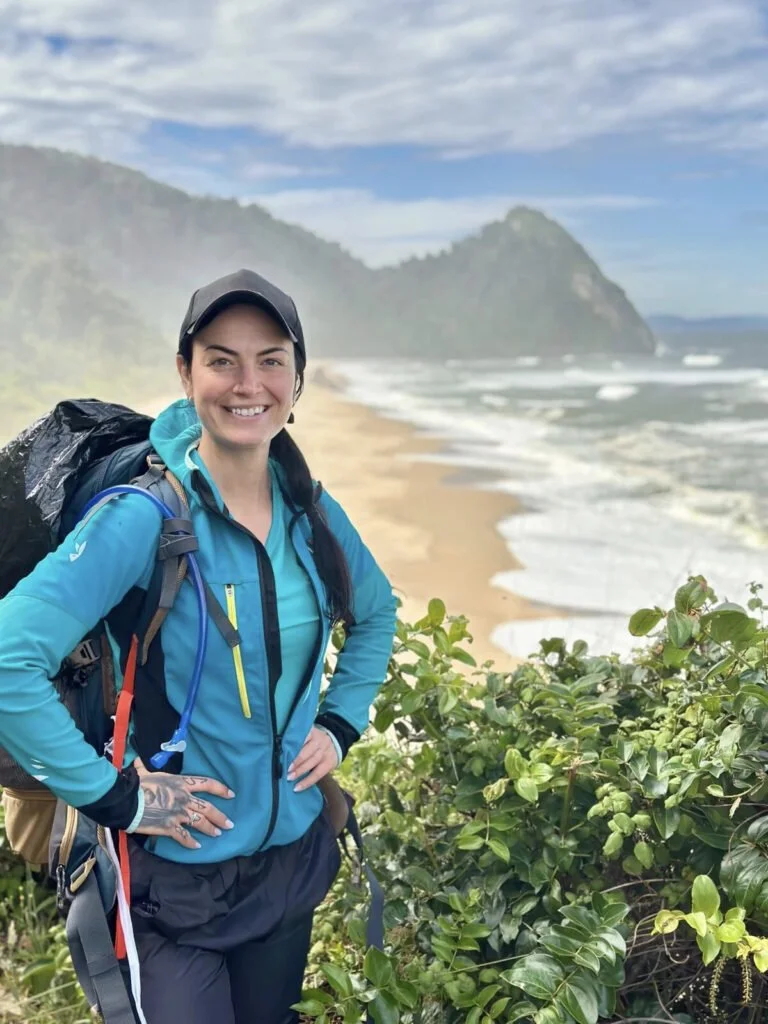
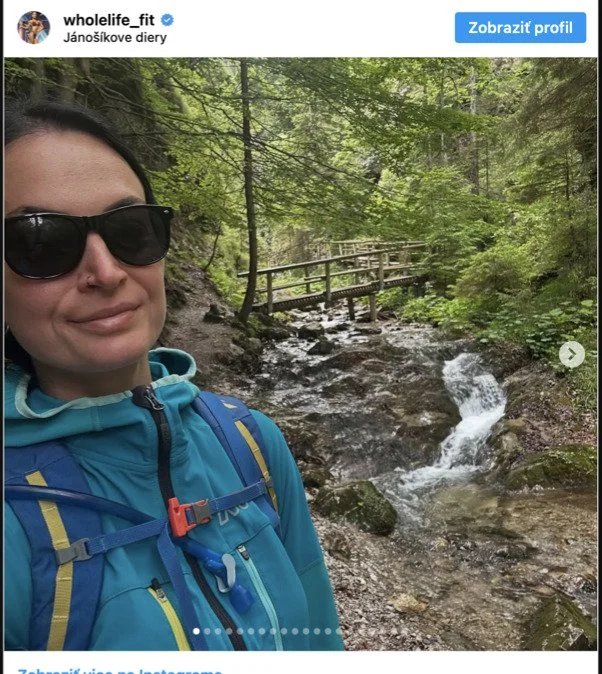
Otherwise, Zealand won me over - with its beauty, nature and great people. You meet people from all over the world there. And especially the outdoor activities were a priority for me - we've been on a lot of hikes, kayaking or mountain biking with my ex-partner.
And of course I competed there, I actually went after my goals. Now I have a business there, so it's more or less like I have something going on there. In the future, I'm trying to do more and more online - webinars about female hormones and stuff - and a book, which I hope will open up space for me to be more mobile and be able to travel the world more.
What is your relationship with Slovakia?
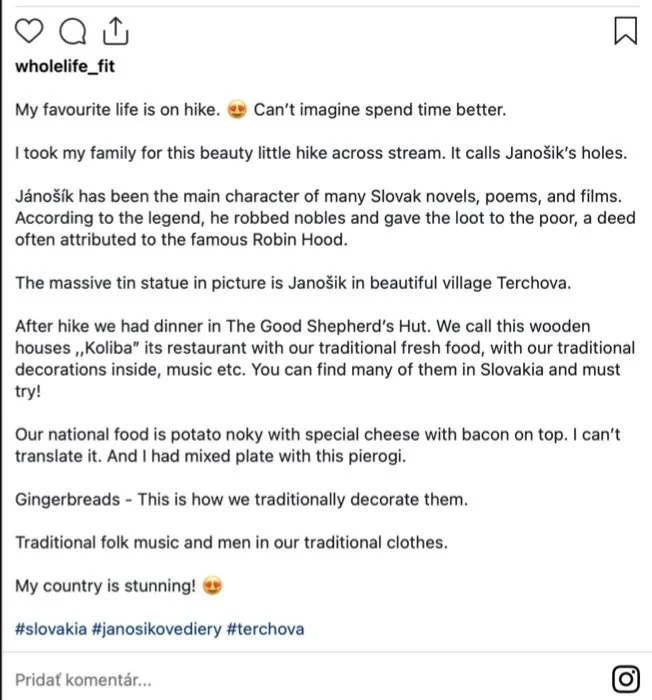
Being in Slovakia for just a short while after three years, it feels absolutely amazing to me now. I'm captivated by what we have here. There's so much different food in the shops, different dairy products and the like – there's not that much in Zealand, because who would import it from the end of the world. We have beautiful nature and very nice people. So I'm absolutely captivated by Slovakia at the moment.
What are your plans for the future? Could you imagine returning to Slovakia?
I will definitely be in Zealand for at least two more years, but I want to go home more often – I plan to come every year and I would really like to compete here. Hopefully I can do it next year. I also want to travel more around Asia, Australia, just everywhere. I will see what happens after that, what the situation will be. Maybe I will go to Australia for a while, then back to Europe, then maybe back to Zealand… and so on.
Live here permanently? Probably not. I think it's hard for those who leave once to come back completely. Maybe not to live completely, but I would like to come back for a few months – for the nature, to climb some hills, to enjoy our country, our family… And then move on. If I ever consider living in Europe, it would probably be in some other country.
Let's go back to your job. You mentioned that you found a job at a gym after just a month and quickly started building your career as a trainer. Was it difficult to stand out among the competition in a foreign country?
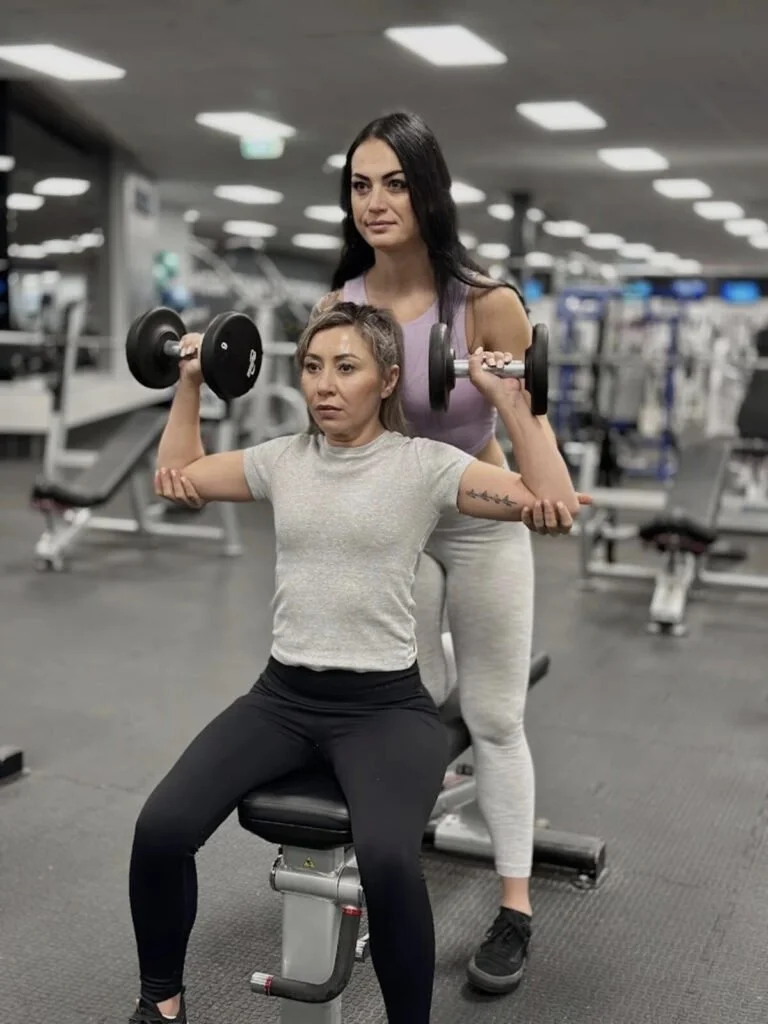
It's mainly about the person's attitude. It's definitely difficult because there's a language disadvantage. At first, I couldn't fully communicate with those people - I couldn't explain to them in professional English what exactly I needed from them in the training. Then it's very important to know how to run a business, how to get clients, how to communicate with them. And actually - I'm exotic to them. I have a different accent, I behave differently, my trainings are quite tough. But that's exactly why I think those people seek me out and contact me. I made a name for myself with my successes, qualifications and the fact that I was able to transform bodies. The results were visible behind my work.
How does bureaucracy work in New Zealand? Is it difficult to start a business there?
There is practically no bureaucracy there. When I started my business, my only job was to do my taxes during tax season. And that's basically all I do. I didn't have to do any paperwork.
For example, no one bothers with re-registering a car there. You don't go to the police. You can do everything in a few minutes at the post office - you just need to fill out a document where the names are re-registered, and that's it. Of course, in order to work in a gym, I need qualifications and I have to constantly educate myself, attend conferences, and the like.
In recent years, there has been a big trend of using various medications that are not primarily intended for weight loss, but have the side effect of reducing weight. Have you noticed that this phenomenon is also popular in New Zealand, or do people there not use such methods to shape their bodies?
Every year, there is a special trend for quick weight loss – whether it is various injections, pills or nutritional supplements. However, in my opinion, it is important to avoid such miraculous methods, because none of them are really effective and healthy in the long term. People just spend money and risk their health, while without proper nutrition and exercise, weight loss will not work.
I have had clients buy drugs like Ozempic, which can reduce appetite, but they have side effects and once you stop taking them, you risk gaining the weight back if you don't start working on your diet and lifestyle. I don't recommend it. I think it's key to learn how to eat and exercise properly, because it's a lifelong thing and it's the best path to long-term health and energy.
What are the biggest mistakes you notice in your clients that lead to their years of unhealthy habits leading to obesity? What do you think are the main mistakes people make throughout their lives?
Marketing is a big mistake. I think people believe marketing. They will believe anything because they are in a situation where they need help – green juices, fat burners, weight loss teas, etc.
Basic foods like eggs, meat, vegetables, rice – they don’t need marketing because they are basic ingredients and you should stick to them.
If someone starting from scratch came to you and asked you for basic advice on what to change to improve their life, what would you advise them?
Results will always come when a person is consistent. I would definitely recommend that the basis of health is regular exercise. If someone doesn't enjoy going to the gym or strength training, it doesn't matter, let them find another activity - it can be dancing, running, hiking or anything else. For women, strength training is essential, especially because of osteoporosis, because after thirty, estrogen levels drop, which causes bone thinning. And this also applies to men - it's good to lift something here and there.
In addition to regular training, it is very important to get quality sleep and also to have a balanced and healthy diet based on as few processed foods as possible. It is important to realize that we have a huge range of options for what to eat, but the basis must always be unprocessed, natural food.
And finally, we must not forget to take care of our minds.
In addition to training, you also compete in the bikini fitness category, where you have achieved several successes. What does your preparation look like?
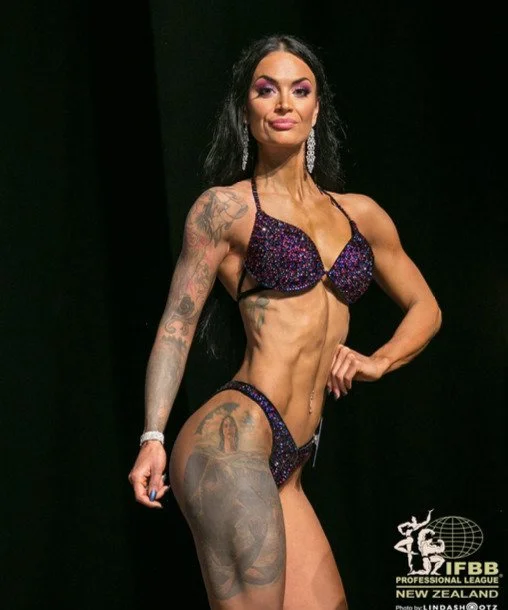
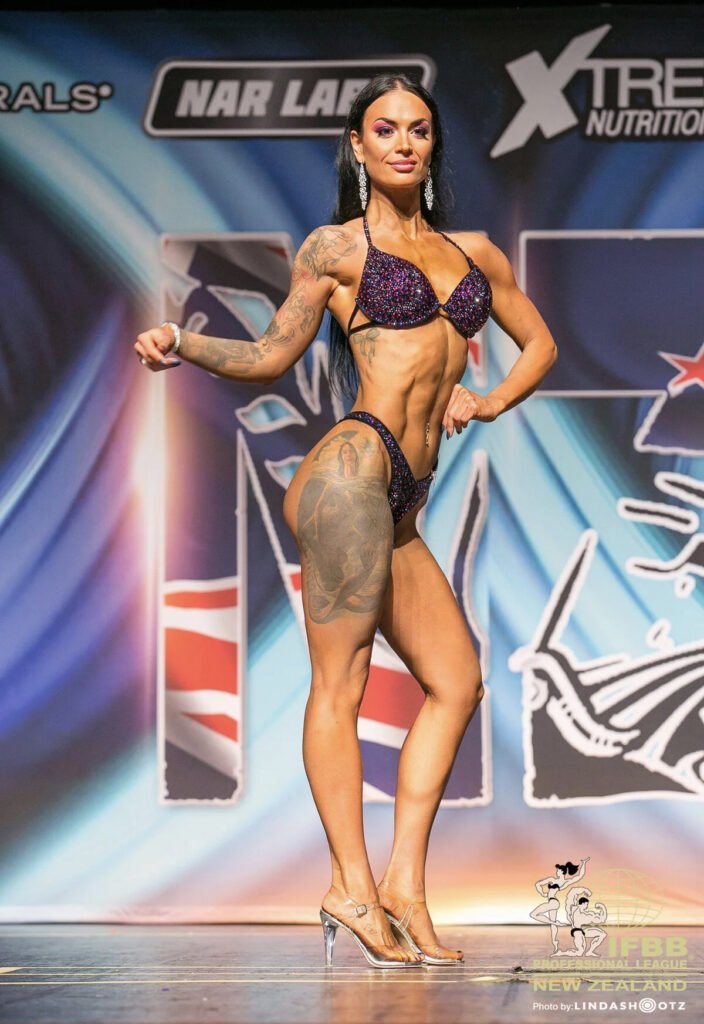
The last competition season was very tough. When I look at those medals, I know exactly how much work went into them. Everything was extreme. For three months I practically ate only egg whites, white fish, and cauliflower, broccoli, or pumpkin. It had no taste, and I don't prefer fish, cauliflower, or broccoli, and I can't even look at pumpkin. I cooked gelatin with different flavors, and I bought different flavors for my meals, just to diversify my taste a little. It was a very difficult preparation, but I managed to place, and that was against strong competition. I took home a few medals, so it was worth it in the end.
How do you stay motivated on such a strict diet?
When you get to prep, the last few weeks of preparation, you go there only by force of will. It's no longer about what you want - but what you have to. At that point, you go because you've put so much effort, energy, and money into it that you can't afford to just give up. People often don't see what's behind those few seconds on stage. I'm there for maybe ten seconds, but it costs me an awful lot - not only physically, but also financially.
And then there's that inner fear – the fear of coming on stage unprepared. Because it's all about comparison. Nobody wants to finish last. When I go to prep, or anything, I go straight to it. No matter what, I go all out.
You indicated that it is also a financially demanding sport. What expenses should be expected? Or is there support from sponsors?
Getting sponsors in sports is extremely difficult. Unless you are in a top professional sport, outside support is practically non-existent. In bikini fitness, this is doubly true – especially at national competitions. There are federations, such as the IFBB, which are recognized worldwide, but even there it is not about any big rewards. Often we only get a medal, a T-shirt… and that is all. Financial prizes only come at the professional level – if at all.
And yet the costs are enormous. Just the stage day itself, the day of the competition, can easily cost a thousand euros. Bikinis cost 300 to 400 euros, depending on the stones and decorations. Then there's jewelry, posing shoes, spray tan, entry fees, annual federation fees, accommodation, flights… and that's not all.
Before that, you pay a trainer, a nutrition coach, a posing coach – because posing is extremely important. Then there are nutritional supplements, special food, cosmetics, hair, make-up… when you add it all up, one competition can easily cost you 5,000 euros. For example, at the FMG federation, where I planned to compete, I calculated that the stage day would cost me exactly that much. That federation is more show-oriented – there is also a red carpet, a gala evening, more expensive bikinis, dresses, styling… it is fitness, but also fashion.
You focus on women in your training and you also take into account the influence of hormones and the cycle. How would you explain why this is important?
The big difference between the male and female bodies is that the male body operates on a daily schedule, while the female body follows a monthly cycle. Men go through a certain pattern during the day – they wake up in the morning full of energy, are active during the day, feel like socializing, and later their energy gradually decreases, they rest and go to sleep. This is their daily rhythm
But women have phases in their monthly cycle. We have weeks when we are full of energy, everything is going well, we feel good, sexy, we go to the gym more often than usual, our diet is going great – everything is in balance. Then comes a phase when things slow down a bit, we have less energy, we relax a bit.
There comes a phase when we feel completely out of tune – nothing works for us, we've messed up everything, we're irritated, we don't feel like exercising, we don't want to see anyone. And then comes a phase when we need to withdraw into ourselves, rest, regenerate and gradually regain our energy.
Of course, it can vary from day to day depending on how much sleep we got, what we ate, or how we felt at work. But hormonal regulation is cyclical and works in monthly phases.
I like to compare it to the fact that the entire cycle is a journey to becoming a mother. At the beginning, a woman prepares for pregnancy and the baby – she wants everything to be tidy, clean, she feels good, she has an appetite for sex, she is attractive, she radiates energy. Then comes the moment when fertilization does not happen, the body reacts – hormones drop, PMS comes, irritability. And at the end there is menstruation – as if the body is grieving that it did not work out this time, and the whole cycle starts again.
This cycle affects everything – our thoughts, moods, relationships, desire to exercise, and food choices. Some days we crave more fat, other days we crave more carbs. Sometimes we can lift a hundred pounds, other days we can sit on a machine and just do some easy exercise. This is all fine – feminine energy is cyclical and we need to consciously work with it.